
18-day around Italy’s boot: Spain, Croatia & Malta overnight
18-night Europe cruise from Lisbon, Portugal to Trieste (for Venice), Italy aboard Rotterdam.
Calling at Seville, Gibraltar, Barcelona, Mallorca, Valletta, Messina, Naples, Civitavecchia, Kotor, Split, Zadar and Trieste, with 3 days at sea. 13 ports of call across Portugal, Spain, Malta, Italy, Montenegro and Croatia.
Rotterdam is a Holland America Line Pinnacle-class ship that entered service in 2021, the seventh ship in the line’s history to carry the name. Carrying around 2,670 guests, she features the World Stage theatre, Music Walk live-music venues and Holland America’s signature dining line-up.
Stateroom categories range from Interior to Neptune Suite.
- 31 Oct 2028 – 18 Nov 2028
from $4,009 pp twin share *
Additional Pricing Information
- Interior from $4,009 pp twin share
- Ocean View from $4,909 pp twin share
- Verandah from $5,509 pp twin share
- Vista Suite from $6,859 pp twin share
- Neptune Suite from $11,659 pp twin share
* Prices and category availability are subject to change without notice.
Itinerary
Day 1 – Lisbon, Portugal
Departs 04:00 pm.
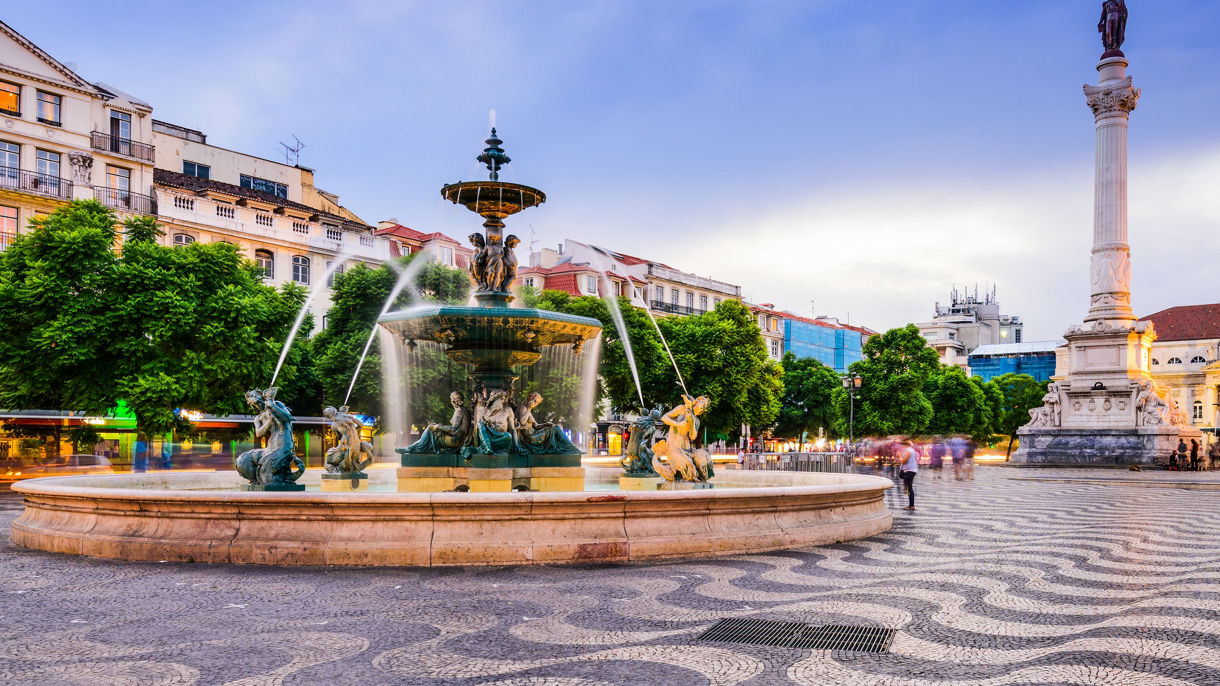
Draped across seven hills, Lisbon was once the center of a vast maritime empire that stretched from the west coast of Africa to the Spice Islands of the East Indies. Then, on November 1, 1755, a violent earthquake destroyed two-thirds of the city in the space of 10 minutes. Only the Alfama, the old Moorish quarter, survived. Today, Lisbon is a stately city of Neoclassical buildings and wide plazas.
Day 2 – Seville (Cadiz), Spain
Arrives 12:00 pm, departs 09:00 pm.
Mention Spain and the images that inevitably spring to mind are images of Andalusia – shadows falling across the bullring, the staccato rhythms of flamenco, the waft of orange blossoms from a Moorish garden. Cadiz is your gateway to this storied land and the city of Seville. Visit Seville’s massive Alcazar fortress, modeled on the legendary Alhambra Palace of Granada. See the city’s cathedral, a 15th-century Gothic masterwork that boasts a Moorish patio, fountain and minaret. Seville is also the legendary home of Don Juan, Bizet’s Carmen and Rossini’s Barber of Seville.Cadiz is one’s of Europe’s oldest inhabited cities, dating from 1100 B.C., and your gateway to Seville and Andalusia.
Day 3 – Gibraltar
Arrives 08:00 am, departs 05:00 pm.
The Rock crouches over the sea like an ancient stone beast, looking Sphinx-like to Africa. Beneath the white cliffs of this natural fortress grows a profusion of palm, pine, and cypress. No fewer than 600 varieties of flowers thrive here, some not found anywhere else on Earth. Gibraltar’s stunning setting is matched by its history – five countries have battled for 13 centuries to control the passage between the Atlantic and the Mediterranean. The result made for a cultural melting pot. Veiled Moroccan women in caftans and vacationing Englishmen and Spaniards stroll along the narrow, steep lanes. The locals revert to a liquid Spanish when talking among themselves. And visitors to a 15th-century cathedral pass through a blue-tiled courtyard, once part of a 13th-century mosque.Helmeted bobbies, pillar-boxes and pubs make for a bit of Britain in the Mediterranean. Gibraltar is a fascinating place, from its caves and batteries to the Barbary apes gamboling on the slopes of the Rock.
Day 4 – At Sea
Day 5 – Barcelona, Spain
Arrives 07:00 am, departs 09:00 pm.
The 1992 Summer Olympics revealed to the world what Europeans and seasoned travelers already knew – Barcelona is one of the world’s greatest treasures. Vibrant and earthy, commercial and cultural, this city of two million residents is the capital of Spain’s autonomous region of Catalonia. Stroll along the wide, tree-lined promenades of Las Ramblas and marvel at the spires of Gaudi’s Basilica La Sagrada Familia. Or visit the former Olympic Ring on the hill of Montjuic – also home to world-class parks, fountains and museums. Barcelona, which nurtured such artistic giants as Picasso, Dali, Miro and Casals, is definitely a traveler’s paradise.
Day 6 – Mallorca (Palma), Spain
Arrives 08:00 am, departs 05:00 pm.
Palma is the capital city of the island of Mallorca, which is one of Spain’s Balearic Islands. The city is tucked into the protected Bay of Palma, creating an impressive view from the Mediterranean Sea with its imposing Gothic Cathedral towering above the old town and remnants of medieval walls that testify to its ancient history. Mallorca has a varied history, from the Roman occupation in the 2nd century to Moorish control from the 9th to the 13th century. Later reconquered by the Spanish kings, it rose to wealth and power due to its strategic position along the seagoing trade routes between Africa and Europe.Today, Palma is the largest city, and also the main tourist area, with beaches on either side of the city that overflow with resort hotels. If you venture beyond these environs, the island’s natural beauty abounds, and life continues in a predictably underdeveloped atmosphere of simplicity. This aspect has long been an attraction for writers, painters and musicians that find inspiration here.Two main languages are spoken on Mallorca – Castilian Spanish and the Balearic dialects of Catalan – hence the different versions of names and spellings throughout the Balearic Islands.
Day 7 – At Sea
Day 8 – Valletta, Malta
Arrives 08:00 am.
Malta is the largest in a group of seven islands that occupy a strategic position between Europe and Africa. The island’s history is long and turbulent. Everyone from the Normans to the Nazis have vied for control of this small, honey-colored rock. For centuries the island was the possession of the knightly Order of St. John – the Knights Hospitaller. Valletta, Malta’s current capital, was planned by the Order’s Grandmaster Jean de la Valette to secure the island’s eastern coast from Turk incursions. Founded in 1566, Valletta’s bustling streets are lined with superb Baroque buildings and churches.Malta has a long history: the megalithic stone temples at Gozo may be the oldest freestanding structures on Earth. Malta has two official languages, Maltese (constitutionally the national language) and English. Malta was admitted to the European Union in 2004 and in 2008 became part of the eurozone.
Day 9 – Valletta, Malta
Departs 05:00 pm.
Malta is the largest in a group of seven islands that occupy a strategic position between Europe and Africa. The island’s history is long and turbulent. Everyone from the Normans to the Nazis have vied for control of this small, honey-colored rock. For centuries the island was the possession of the knightly Order of St. John – the Knights Hospitaller. Valletta, Malta’s current capital, was planned by the Order’s Grandmaster Jean de la Valette to secure the island’s eastern coast from Turk incursions. Founded in 1566, Valletta’s bustling streets are lined with superb Baroque buildings and churches.Malta has a long history: the megalithic stone temples at Gozo may be the oldest freestanding structures on Earth. Malta has two official languages, Maltese (constitutionally the national language) and English. Malta was admitted to the European Union in 2004 and in 2008 became part of the eurozone.
Day 10 – Messina, Italy
Arrives 08:00 am, departs 05:00 pm.
Day 11 – Naples, Italy (for Capri & Pompeii)
Arrives 08:00 am, departs 06:00 pm.
Italy’s third-largest city, Naples is a bustling metropolis famed for it stately buildings, crowded streets, pizza – and notoriously bad traffic. However, this beautiful city is rich in centuries-old culture and customs. Naples is also your gateway to the Isle of Capri, the fabled Amalfi Coast and the ruins of Pompeii, buried in ash by the cataclysmic eruption of Mt. Vesuvius in 79 A.D. Naples boasts an ideal location, with both the ruins of Roman cities and the stunning Amalfi Coast in easy reach.
Day 12 – Civitavecchia (for Rome), Italy
Arrives 07:00 am, departs 05:00 pm.
Your gateway to the Eternal City, Civitavecchia has served as Rome’s seaport since the 13th century. The port has a long and venerable history. The emperor Trajan built a pleasure villa near the modern city, while Bernini and Michelangelo designed the harbor fortifications.Yet the Eternal City eternally beckons. The ancient capital of the Western World and the center of Christianity for nearly 2,000 years, Rome provides an inexhaustible feast. Visit the ruins of the Forum, view the splendors of the Sistine Chapel, or climb the Spanish Steps, once the heart of Rome’s Bohemian Quarter.Rome has been a magnet luring the world’s greatest artists, architects, and philosophers since the days of the Caesars.
Day 13 – Naples, Italy (for Capri & Pompeii)
Arrives 08:00 am, departs 06:00 pm.
Italy’s third-largest city, Naples is a bustling metropolis famed for it stately buildings, crowded streets, pizza – and notoriously bad traffic. However, this beautiful city is rich in centuries-old culture and customs. Naples is also your gateway to the Isle of Capri, the fabled Amalfi Coast and the ruins of Pompeii, buried in ash by the cataclysmic eruption of Mt. Vesuvius in 79 A.D. Naples boasts an ideal location, with both the ruins of Roman cities and the stunning Amalfi Coast in easy reach.
Day 14 – Messina, Italy
Arrives 08:00 am, departs 05:00 pm.
Day 15 – At Sea
Day 16 – Kotor, Montenegro
Arrives 08:00 am, departs 05:00 pm.
Kotor lies at the head of Boka Bay. Bordered by towering limestone cliffs, the winding bay is actually Southern Europe’s longest and most dramatic fjord. The port itself is a medieval gem: its narrow, asymmetrical streets are lined with ancient stone houses, old palaces, and churches dating from the 12th century. Kotor is also your gateway to the cultural and scenic wonders of Montenegro, from the old royal capital at Cetinje to the marshes and wildlife of Lake Skadar National Park.Kotor is renowned for its nightlife: the streets of the old port are lined with pubs, taverns and cafés. The city is also host to a renowned summer carnival.Kotor is an anchorage port. Passengers transfer to shore via ship’s tender.
Day 17 – Split, Croatia
Arrives 08:00 am, departs 06:00 pm.
Pine-clad hills, secluded coves, beaches – Split and the Dalmatian Riviera have been premier destinations on the Adriatic since the days of the Roman emperors. In fact, medieval Split was built within and around the palace complex built for the emperor Diocletian in his retirement. (The complex included both a villa and a castrum – a Roman camp capable of garrisoning three legions!) The charms that soothed an emperor are still evident today. The Dalmatian Riviera offers the traveler a heady blend of natural beauty and fascinating cultural sites.Diocletian abdicated in 305 A.D. During his reign, the emperor ruthlessly persecuted Christians. Ironically Split’s St Dominius’ Cathedral occupies his mausoleum.
Day 18 – Zadar, Croatia
Arrives 08:00 am, departs 05:00 pm.
Is the oldest continuously inhabited city in Croatia. It is situated on the Adriatic Sea, at the northwestern part of Ravni Kotari region.
Day 19 – Trieste (for Venice), Italy
Arrives 07:00 am.
Tucked in the country’s northeast corner on the Adriatic Sea and once the flourishing port of the Austro-Hungarian Empire, Trieste became a largely forgotten borderland after World War I. But today, those who visit find a blend of cultures and languages of Europe, with a rich literary legacy – a city that’s lured great authors from Ranier Maria Rilke to James Joyce. Waves from the Adriatic lap its elegant promenades. It lies below the Karst, limestone cliffs that are a popular destination for nature lovers and where vineyards produce wines that taste of sea and stone. Legend has it Jason and the Argonauts – with the golden fleece – sailed in from an underground river. A well-preserved Roman theater, that once seated up to 6,000 spectators, is testimony that in antiquity, this was a thriving city. Gilded mosaics in San Giusto Cathedral are evidence of Byzantine influence. Trieste offers endless opportunity for exploration not only in the town and surroundings, but also to neighboring Slovenia and not so far distant Venice.
Highlights
- Live music venues and nightly entertainment on board Rotterdam
- Fitness centre and swimming pools included for your use
- Enrichment programme and port talks arranged throughout the voyage
18-night Europe cruise from Lisbon, Portugal to Trieste (for Venice), Italy aboard Rotterdam.
Calling at Seville, Gibraltar, Barcelona, Mallorca, Valletta, Messina, Naples, Civitavecchia, Kotor, Split, Zadar and Trieste, with 3 days at sea. 13 ports of call across Portugal, Spain, Malta, Italy, Montenegro and Croatia.
Rotterdam is a Holland America Line Pinnacle-class ship that entered service in 2021, the seventh ship in the line’s history to carry the name. Carrying around 2,670 guests, she features the World Stage theatre, Music Walk live-music venues and Holland America’s signature dining line-up.
Stateroom categories range from Interior to Neptune Suite.
Inclusions
- Dining in the main Dining Room and casual venues
- Live music venues and nightly entertainment
- Fitness centre and swimming pools
- Enrichment programme and port talks
FAQs
Rotterdam is a Holland America Line Pinnacle-class ship that entered service in 2021, the seventh ship in the line’s history to carry the name. Carrying around 2,670 guests, she features the World Stage theatre, Music Walk live-music venues and Holland America’s signature dining line-up.
Stateroom categories available on this sailing: Neptune Suite, Vista Suite, Verandah, Ocean View and Interior.
How long is this journey?
This itinerary runs for 19 days and 18 nights.
When can I travel?
Departures are currently scheduled between 31 Oct 2028 and 18 Nov 2028, subject to live availability.
What is generally included?
Inclusions typically cover guided touring and selected experiences, with exact details listed in the itinerary.
What style of accommodation is used?
Accommodation is pre-arranged as part of the journey, with specific properties shown in the trip details.
Provided by: Holland America LineFine Print
Terms and conditions apply. Click here for more details.
Enquire Now
Speak with our travel experts and get your personalised quote.