
Mediterranean with Greek Isles
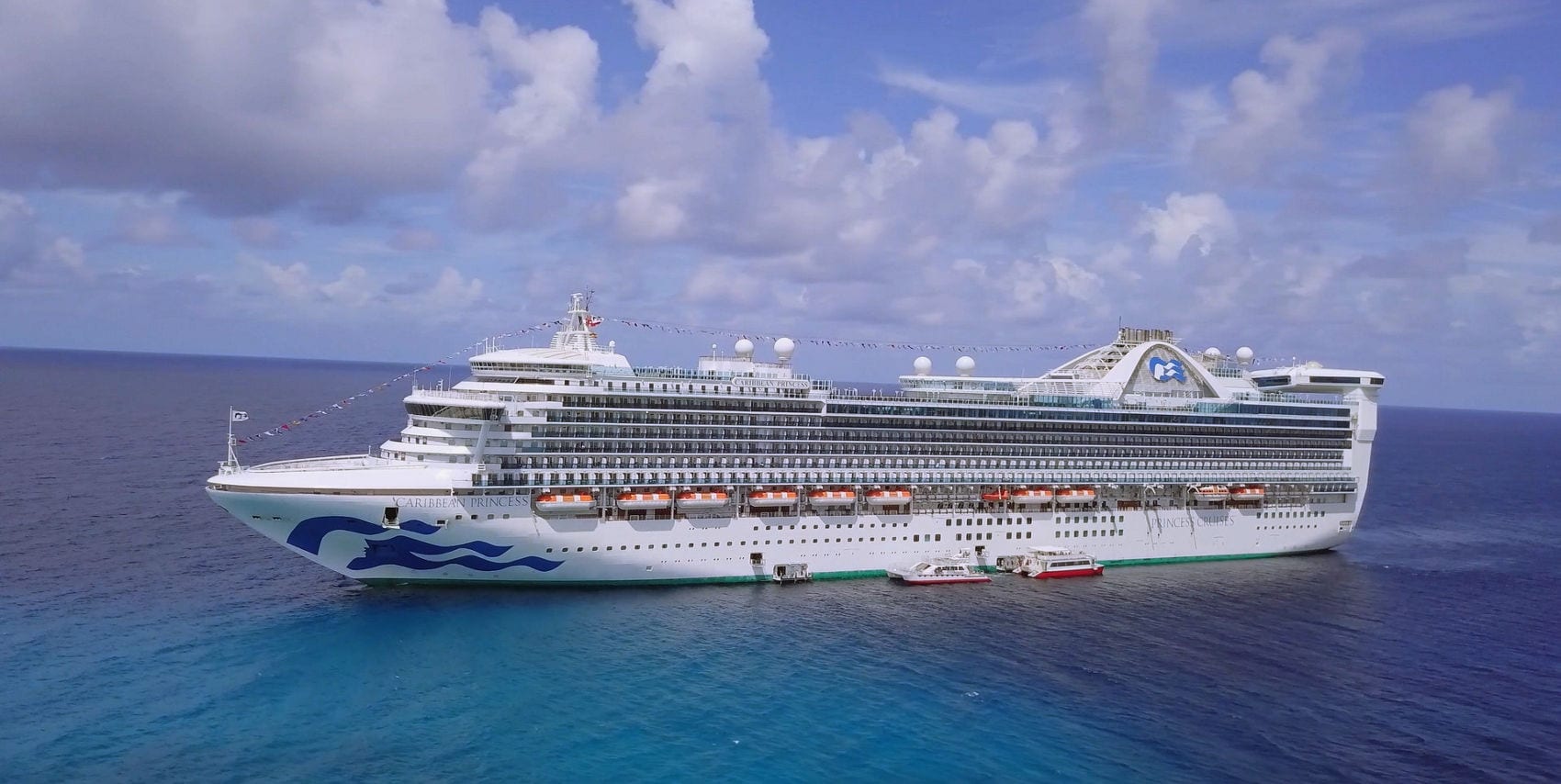
11-night Mediterranean cruise from Civitavecchia (for Rome), Italy to Athens (Piraeus), Greece aboard Caribbean Princess
- 30 Mar 2028 – 10 Apr 2028
from $2,350.40 pp twin share *
Additional Pricing Information
- Interior from $2,350.40 pp twin share
- Balcony from $2,980.40 pp twin share
- Mini-Suite from $3,940.40 pp twin share
- Suite from $7,529.40 pp twin share
* Prices and category availability are subject to change without notice.
Itinerary
Day 1 – Civitavecchia (for Rome), Italy
Departs 06:00 pm.
Your gateway to the Eternal City, Civitavecchia has served as Rome’s seaport since the 13th century. The port has a long and venerable history. The emperor Trajan built a pleasure villa near the modern city, while Bernini and Michelangelo designed the harbor fortifications.Yet the Eternal City eternally beckons. The ancient capital of the Western World and the center of Christianity for nearly 2,000 years, Rome provides an inexhaustible feast. Visit the ruins of the Forum, view the splendors of the Sistine Chapel, or climb the Spanish Steps, once the heart of Rome’s Bohemian Quarter.Rome has been a magnet luring the world’s greatest artists, architects, and philosophers since the days of the Caesars.
Day 2 – Sardinia (cagliari), Italy
Arrives 09:00 am, departs 05:00 pm.
The views from the Terrazza Umberto I are panoramic: one looks out over Sardinia’s capital, a city ancient even in Roman times. Mountains frame the azure waters of the gulf. Nearby lagoons harbor flocks of flamingos and egrets. Welcome to one of the most intriguing ports in the Western Mediterranean. Founded by Phoenician traders in the 7th century B.C., Cagliari has been a Carthaginian colony and a Roman seaport. Those fine old walls supporting the Terrazza Umberto I were erected in the 13th century by the Italian city-state of Pisa. In addition to its fine old Italian architecture, Cagliari boasts superb light, inviting waters and excellent beaches.The city-state of Pisa and the Kings of Aragon vied for control of Sardinia for two centuries. The cathedral, built by Pisans in the 13th century, holds the mausoleum of a 15th century Aragonese prince.
Day 3 – Sicily (Palermo), Italy
Arrives 08:00 am, departs 05:00 pm.
Palermo is a cultural feast, a fascinating combination of East and West, Arab and Norman that is quite unlike any other European city on the Mediterranean. A simple stroll can serve to illustrate Palermo’s rich heritage. The Quattro Canti is the great square at the heart of the city. A short walk past its 17th-century palazzos and fountains brings the traveler to the Palazzo dei Normanni. Begun by Arab emirs in the 9th century, the Palazzo was finished by the island’s Norman conquerors. The Palazzo’s stone arches and buttresses stand in stark contrast to its Palatine Chapel. There elaborate tile work and mosaics lend mute testimonies to the Islamic and Byzantine influences that a lso shaped Palermo’s culture. The city abounds in such colorful sights, from the neo-classical Teatro Massimo, one of the largest opera houses in Europe, to the catacombs beneath the Capuchin convent, where thousands of mummified bodies lie in eternal rest.
Day 4 – Valletta, Malta
Arrives 10:00 am, departs 09:00 pm.
Malta is the largest in a group of seven islands that occupy a strategic position between Europe and Africa. The island’s history is long and turbulent. Everyone from the Normans to the Nazis have vied for control of this small, honey-colored rock. For centuries the island was the possession of the knightly Order of St. John – the Knights Hospitaller. Valletta, Malta’s current capital, was planned by the Order’s Grandmaster Jean de la Valette to secure the island’s eastern coast from Turk incursions. Founded in 1566, Valletta’s bustling streets are lined with superb Baroque buildings and churches.Malta has a long history: the megalithic stone temples at Gozo may be the oldest freestanding structures on Earth. Malta has two official languages, Maltese (constitutionally the national language) and English. Malta was admitted to the European Union in 2004 and in 2008 became part of the eurozone.
Day 5 – At Sea
Day 6 – At Sea
Day 7 – Alexandria (Cairo), Egypt
Arrives 06:00 am, departs 11:59 pm.
Day 8 – At Sea
Day 9 – Limassol, Cyprus
Arrives 07:00 am, departs 04:00 pm.
Limassol offers everything a traveler desires in a Mediterranean destination. The second-largest city on Cyprus is surrounded by a wealth of historic sites ranging from the Greco-Roman ruins at Paphos and Curium to Crusader castles. The Troodos Mountains feature quaint villages, dramatic scenery and cool, dense pine forests. The island’s capital of Nicosia is a mere hour’s drive from the port. And for the casual visitor, Limassol offers its own medieval castle, a superb Public Garden, excellent beaches and that exhilarating Mediterranean light.Cyprus lies at the crossroads of the Eastern Mediterranean. Over centuries, every major power has contended for control of the island. Today, the Republic of Cyprus is a member of the European Union.
Day 10 – Rhodes, Greece
Arrives 09:00 am, departs 06:00 pm.
The largest and arguably the most beautiful of the 12 islands forming the Dodecanese, Rhodes has long played a major role in history. Lying just 12 miles off the coast of Turkey, the island straddles the sea-lanes linking Egypt, Southern Europe and the Holy Land. Rhodes Town bears witness to that long history. The ancient city features a classical stadium and the ruins of the Temple of Apollo. The “old” city is a walled town with medieval buildings and streets harking back to the days of the Crusades. The new town is a Mecca of luxury resorts lining the island’s picturesque Mandaraki Harbor.The Colossus of Rhodes, one of the Seven Wonders of the Ancient World, is reputed to have once stood guard over the harbor. Today, the bronze statues of a stag and doe top the two columns marking the harbor entrance.
Day 11 – Crete (heraklion), Greece
Arrives 07:00 am, departs 05:00 pm.
Archaeological evidence shows that Heraklion probably arose during the 9th century B.C. and was named in tribute to the Greek goddess Rhea, mother of Zeus. And like most Mediterranean cities, Heraklion has a long and turbulent history. Officially founded by the Saracens in the 9th century, the Byzantine Empire invaded in 961 only to lose control to the Crusaders who sold Crete to the Venetians in 1211 for a thousand silver coins.Heraklion finally flourished under the Venetians. Throughout the city you’ll find stunning reminders of their influence: the Loggia, Venetian Walls, and Fountain of Morosini are just a few must-see examples.But Heraklion is probably best known as the gateway to the breathtaking 4,000 year-old Minoan ruins at Knossos and to the famous windmills stretched across the Lassithi Plateau.
Day 12 – Athens (Piraeus), Greece
Arrives 06:00 am.
The past maintains a vibrant presence in the cradle of Western civilization. Atop the Acropolis, the serene Parthenon sails above the commotion of the modern city. The tragedies of Aeschylus, Sophocles, and Euripides were performed in the Theater of Dionysus at the foot of the Acropolis. On Pnyx Hill, citizens of a fledgling democracy gathered to cast their votes on Athens’ destiny. Then there is the hustle and bustle of the modern city, a metropolis of 4.5 million that spreads out from the foot of Mt. Lycabettus and across the plain. Packed with busy shops and lively tavernas, modern Athens is a colorful counterpoint to classical Greece. Piraeus is the port city for Athens and has been Athens’ port of entry for over two millennia.
Highlights
- Broadway-style entertainment on board throughout the voyage
- MedallionClass experience included for a seamless cruise
- Youth and teen clubs for children aged 3 to 17
11-night Mediterranean cruise from Civitavecchia (for Rome), Italy to Athens (Piraeus), Greece aboard Caribbean Princess
Inclusions
- MedallionClass® experience
- Broadway-style entertainment
- Multicourse dining and casual venues
- Fitness facilities
- Youth and teen clubs (ages 3–17)
FAQs
How long is this journey?
This itinerary runs for 12 days and 11 nights.
When can I travel?
Departures are currently scheduled between 30 Mar 2028 and 10 Apr 2028, subject to live availability.
What is generally included?
Inclusions typically cover guided touring and selected experiences, with exact details listed in the itinerary.
Provided by: Princess CruisesFine Print
Terms and conditions apply. Click here for more details.
Enquire Now
Speak with our travel experts and get your personalised quote.